By Prime FT
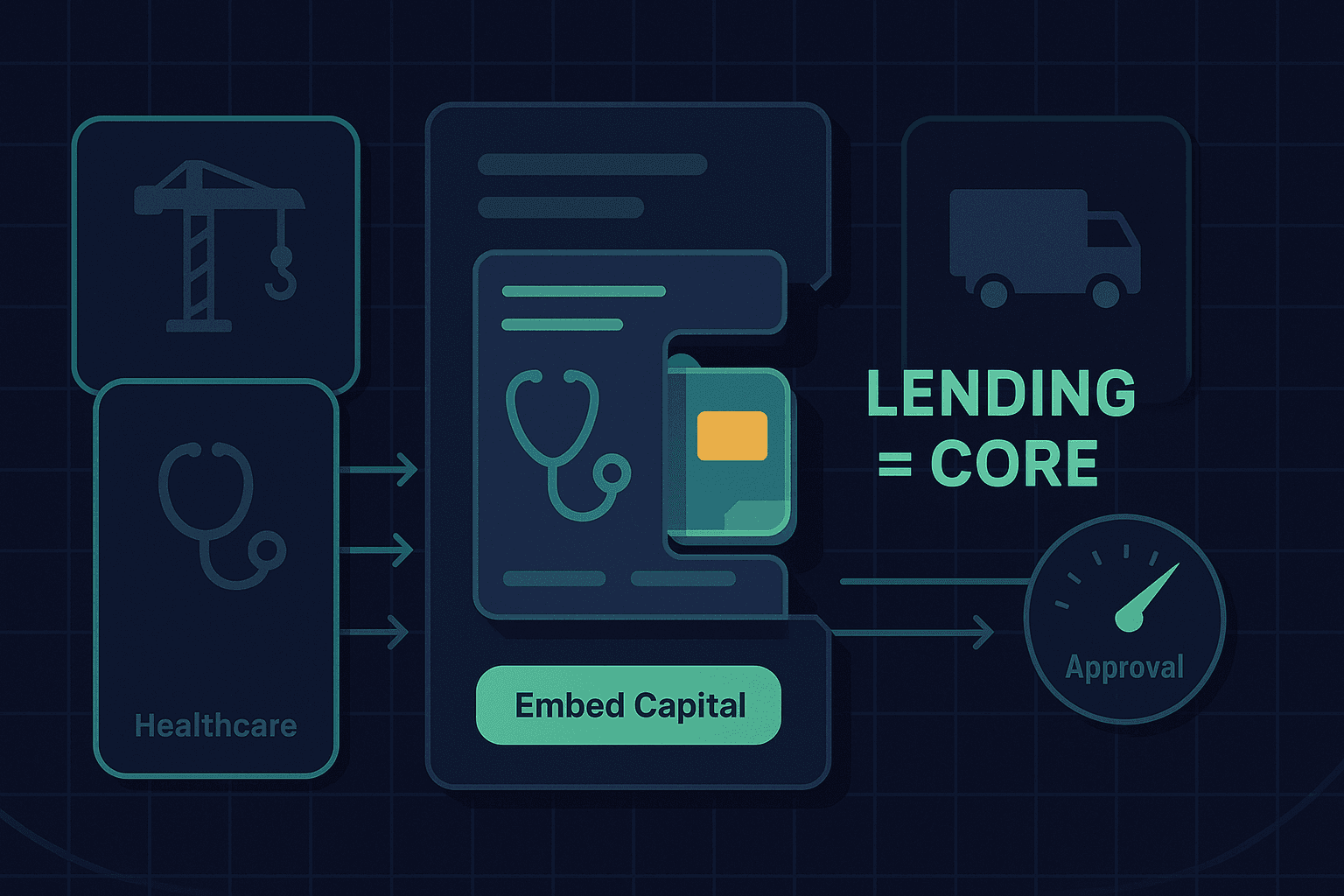
The days of vertical SaaS being just workflow software are over. The next generation of platforms will finance the industries they serve. By embedding lending directly into daily processes, SaaS companies can unlock retention, revenue, and a powerful competitive edge.
Vertical SaaS has transformed industries over the last decade. Construction firms, healthcare practices, logistics operators, and countless other sectors have traded clipboards and spreadsheets for software that streamlines their workflows.
We’re now entering a new chapter in the evolution of industry-specific software. Digitizing tasks is no longer enough. The next competitive frontier is about embedding financial functionality, and lending sits right at the center of it. Payments have existed as a core feature of vSaaS platforms for a while now, and for good reason. There’s plenty of profit to be made by taking a percentage of every payment a small business takes, and it's a win-win when payments are delivered into a single portal alongside other relevant data like appointment booking and invoicing. Carrying that one step further, that payment data can be used to help underwrite loans and aid in managing credit risk. A vSaaS company’s customers are undoubtedly out shopping for working capital, so it is a natural fit that they delve into lending themselves to a) deliver working capital where it's needed and b) create additional stickiness to their customer relationships.
For years, software companies treated lending like an afterthought: a banner ad tucked into the dashboard, a third-party referral link, or an optional integration buried in the settings.
That approach doesn’t work anymore because customers of vertical SaaS platforms don’t just want better workflows; they need working capital inside those workflows.
A clinic must make payroll while waiting for reimbursements to clear.
A contractor wins a new project and needs financing to pre-pay suppliers.
A freight operator has carriers to pay before shipper invoices are settled.
If the software already runs these processes, why should the customer leave the platform to find financing elsewhere?
Platforms Hold the Data Advantage
Traditional lenders have always struggled to serve small and midsize businesses efficiently. Their underwriting models rely on backward-looking data: credit scores, tax returns, collateral requirements, and time-consuming reviews.
SaaS platforms are sitting on something better in the form of real-time, forward-looking data:
Sales and invoice flows
Vendor and supplier payments
Payroll cycles and seasonality trends
Transaction volumes and customer churn
This data advantage enables SaaS platforms to help deliver financing decisions quickly, contextually, and with greater confidence.
The Market Is Moving Fast
Across industries, platforms are no longer asking if they should offer capital; they’re asking how soon.
The logic is clear:
Speed matters more than price. Businesses often need funds within hours or days, not weeks.
Retention follows capital. Customers who secure financing through their core platform are far less likely to churn.
Revenue diversification is essential. Subscription fees alone don’t maximize customer lifetime value. Adding embedded financial products creates entirely new income streams.
This is why lending is shifting from being a bolt-on feature to a baseline expectation.
Lending as a Retention Engine
SaaS platforms live and die by retention. Every incremental point of churn reduction matters.
When financing is integrated directly into invoicing, payables, or vendor management tools, customers gain efficiency and liquidity in the same place. That convenience and reliability become sticky. It’s not just about offering a loan, it’s about making financing part of the daily workflow. And once those processes are intertwined, the platform moves from being “helpful software” to becoming an indispensable business partner.
Let’s be clear: lending isn’t just a nice-to-have anymore. It’s becoming table stakes.
Think about payroll platforms without earned wage access, or e-commerce platforms without seller financing. Five years ago, those gaps might have been tolerated. Today, they look like oversights.
The same is happening in vertical SaaS. Platforms that fail to integrate capital will watch customers migrate toward alternatives that make financing seamless.
What This Means for SaaS Operators
For operators, the message is simple: the workflow wave carried SaaS companies this far. The finance wave will determine who wins the next decade.
Embedding lending transforms software into a financial hub, not just a task manager.
It aligns perfectly with customer pain points: liquidity and cash flow are universal concerns.
And it strengthens the core business model, improving retention and unlocking new revenue lines.
The PrimeFT Perspective
At PrimeFT, we see this shift every day. Platforms that once sought us out for technical integrations now approach us for financial enablement. They’ve realized that lending isn’t a side hustle. It’s the strategic backbone of their next growth phase.
Whether it’s a construction SaaS embedding financing into supplier payments, a healthcare platform offering credit alongside billing, or a logistics tool helping carriers smooth cash flow, the pattern is the same.
Lending stops being an add-on. It becomes the feature that defines the platform’s value. The first wave of vertical SaaS digitized industries. The next wave will finance them.
For platform leaders, the decision is no longer whether to embed lending, but how quickly they can do it. Those who move now will be the ones shaping the future of their industries.
At PrimeFT, we’ve built the rails to make that possible.
Want to learn more? Click here to schedule a demo.